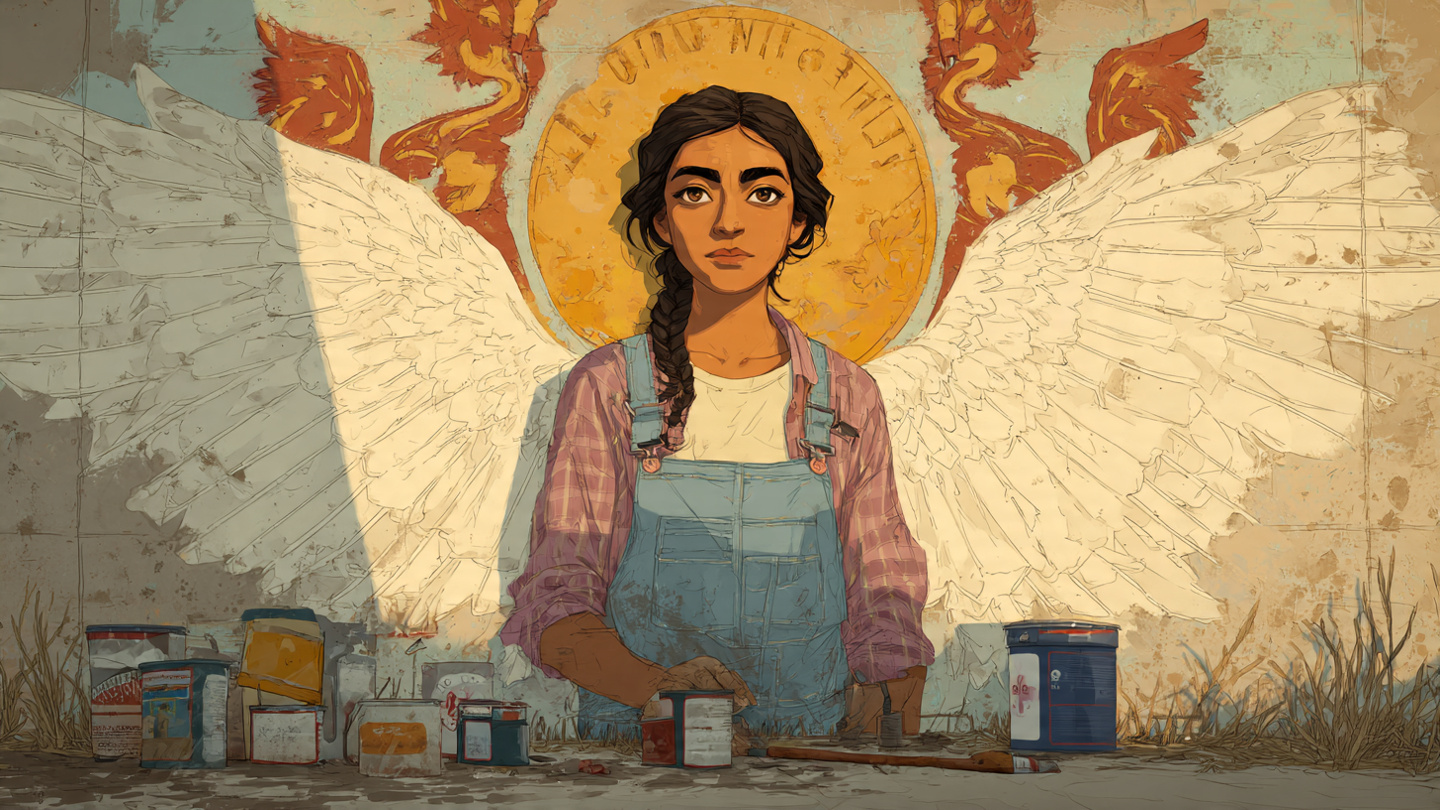
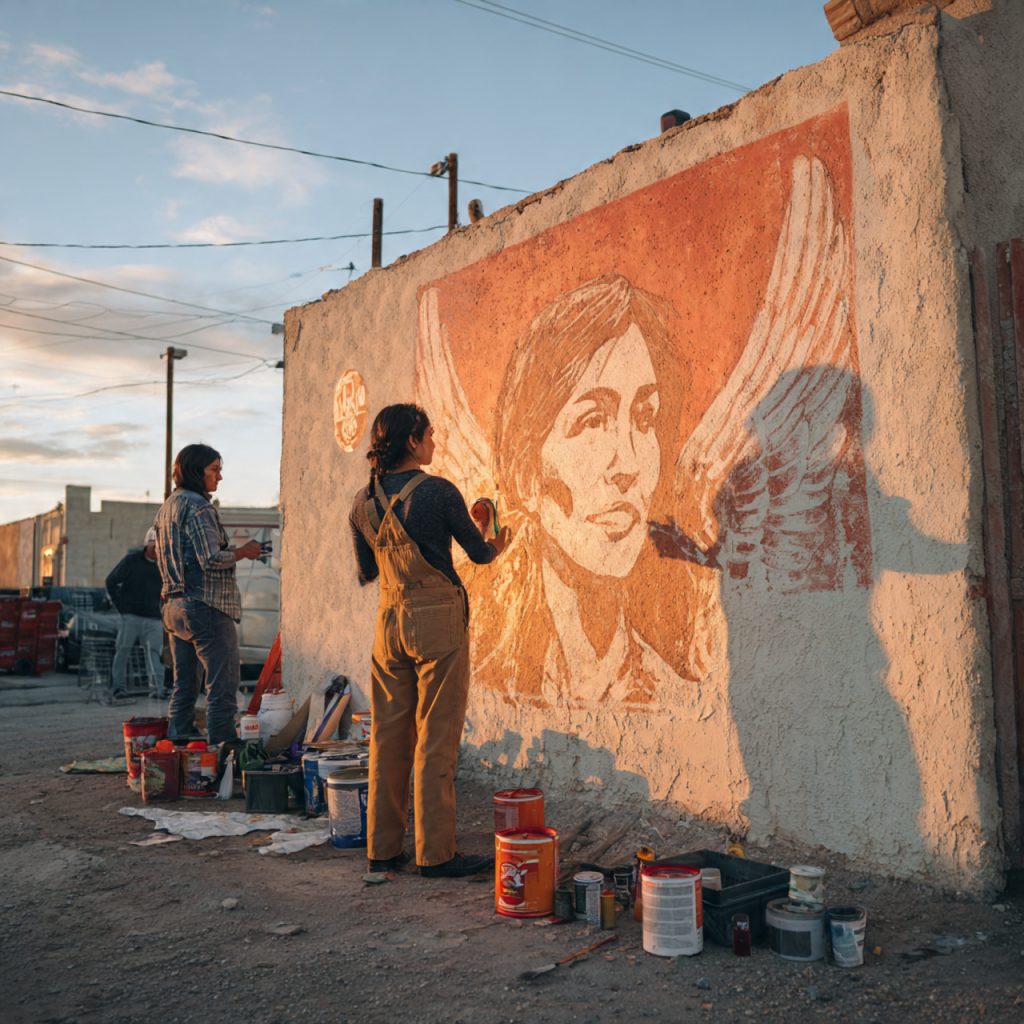
A mural-in-progress: an artist refreshes a portrait of a farmworker leader, wings rising behind her—a visual nod to strength, freedom, and spirit. In Chicano and movement art, wings often mark resilience and uplift. This wall speaks to the same question the article asks: how we remember the UFW—by honoring the collective, centering women’s leadership, and making space for truth.
What Do We Do With the Murals Now? Art After the Chávez Allegations
I grew up seeing César Chávez everywhere—on classroom walls, on community murals next to the UFW eagle, on T-shirts at marches. “Sí se puede” was shorthand for dignity and collective power. Then the stories came out: sexual abuse allegations, including from Dolores Huerta, some involving girls who were minors at the time. Events were canceled, and a lot of us who were raised on that image had to stop and ask: what does honoring a movement look like when the man at the center hurt people?
Artists have been the first to answer, and not with easy slogans. Lalo Alcaraz painted a girl in overalls covering Chávez’s face on a mural that also holds Huerta and the eagle—the outline still shows through. In Watts, a Chávez mural is being replaced with Dolores Huerta. Photographer Christina Fernández pulled a piece from her Keene series. Self Help Graphics named survivors and called for centering their voices. Different choices, same question: how do we tell the truth without erasing the people who did the work?
For me, the path isn’t to flatten the story into hero or villain. The farmworker movement was never just one man; it was families in the fields, organizers, artists, boycott captains, and yes—Huerta—who built something together. Our public art can reflect that. Add context plaques. Commission new pieces that center the collective. Keep the eagle, but let it fly over the whole community, not one face. And if a mural comes down, replace it with something that makes room for survivors, not just legacy.
This isn’t about purity tests. It’s about honesty. We can hold two things at once: that the strikes, fasts, and boycotts changed lives, and that harm was done in the shadows. The most powerful art I’m seeing right now does exactly that—painting over, painting anew, and inviting us to remember the movement as a chorus, not a solo.